The spiritual shelf
The spiritual books worth your time, and how each one sounds
Twelve books that keep turning up on the bedside tables of people who changed how they live. For each one: what it actually says, who it suits, who reads the audiobook, and whether your library will lend it to you free.
The Listening ShelfUpdated 3 October 20269 min read
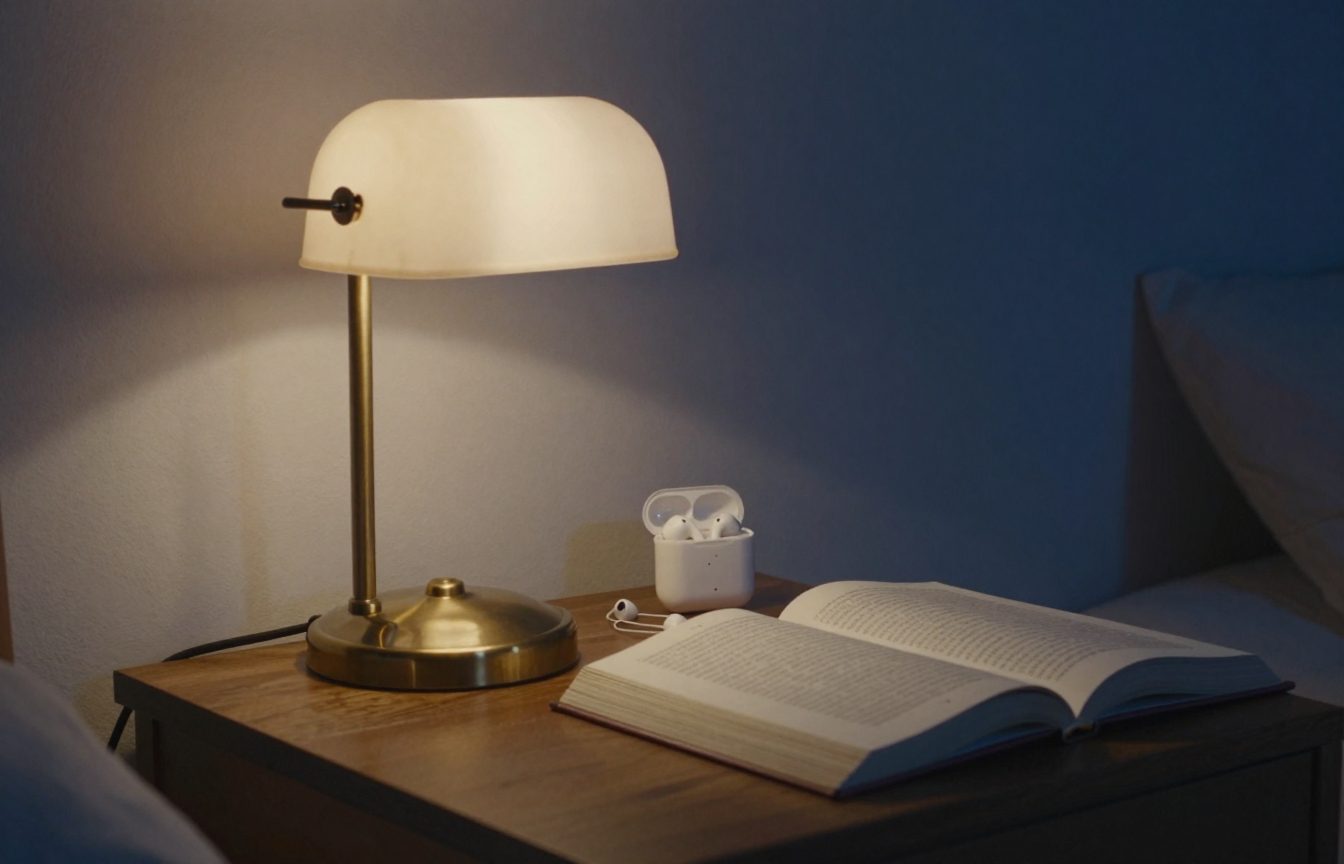
If you only read one line: start with a short book you will finish, not the most famous one. The Four Agreements takes two and a half hours to hear. The Power of Now takes seven and a half. Both have changed more lives than the long ones people abandon at chapter three.
Every book below carries a listening card. "Free on Libby" means the audiobook sat in the Libby catalogue of Brisbane City Council Libraries or the City of Sydney Library when we checked; your own council library may differ, and many use BorrowBox instead. Prices are Audible Australia's cash prices on the same day.
Where to start, by what you need
- A noisy mind: The Power of Now, then The Untethered Soul.
- A hard season: When Things Fall Apart, then Man's Search for Meaning.
- A practice, not a theory: Zen Mind, Beginner's Mind, then the meditation shelf.
- A story instead of instructions: The Alchemist.
- Spirituality without religion: Waking Up.
The twelve
1. The Power of Now, Eckhart Tolle
The book that started the modern wave. Tolle's claim is simple and he repeats it on purpose: most suffering comes from the running commentary in your head, about the past and the future, and the way out is attention to the present moment. It is written as questions and answers, which makes it easy to dip into. He reads the audiobook himself, slowly and quietly; play Audible's free sample before you spend a credit. Our Eckhart Tolle guide covers which of his books to read next.
2. The Untethered Soul, Michael A. Singer
Singer's book makes the same move as Tolle's in a warmer, more conversational way: notice the voice that narrates your day, and notice that you are the one noticing. The second half is about letting old hurts pass through instead of storing them. It is the book many people say finally made Tolle make sense. Singer founded a meditation centre in Florida in the 1970s, and the book reads like someone who has been teaching the same idea for decades. Both Australian libraries we check hold the audiobook, City of Sydney with dozens of copies, so the wait is usually short.
3. Man's Search for Meaning, Viktor E. Frankl
Frankl was a Viennese psychiatrist who survived Auschwitz and other Nazi camps. The first part of the book is his account of the camps; the second sets out logotherapy, his idea that the drive to find meaning, not pleasure, is what keeps people going. A 1991 Library of Congress survey of readers placed it among the ten most influential books in the United States. It is not a gentle listen. It is short, and it stays.
4. The Four Agreements, Don Miguel Ruiz
Four rules for living, presented as Toltec wisdom: be impeccable with your word, don't take anything personally, don't make assumptions, always do your best. It is the shortest book on this list and the easiest to act on the same day. Neither Libby catalogue we check had the audiobook. Our summary and honest review goes through each agreement and where the book overreaches.
5. The Alchemist, Paulo Coelho
A fable rather than a teaching: a shepherd boy dreams of treasure at the pyramids and crosses the desert to find it. It is on spiritual lists because of its idea of a "Personal Legend", the thing you are here to do. Jeremy Irons reads the English audiobook. Our summary covers the plot and why it still lands with people.
6. When Things Fall Apart, Pema Chödrön
An American Buddhist nun writing for people in the middle of something painful: a breakup, an illness, a loss. Chödrön teaches in the Tibetan tradition but writes for anyone. The chapters are short talks, each complete in itself, which makes it good for a bad week when you cannot hold a long argument in your head. It sits on our grief shelf too.
7. The Wisdom of Insecurity, Alan Watts
Watts' 1951 argument that chasing safety is what makes us anxious, and that the present moment is the only place life happens. It anticipates much of what Tolle said fifty years later, in livelier prose. The audiobook is read by John Lee, not Watts; for Watts' own voice, see our Alan Watts guide.
8. Zen Mind, Beginner's Mind, Shunryu Suzuki
Short talks given by a Japanese Zen teacher to his American students, edited into a book in 1970. Suzuki founded the San Francisco Zen Center. It is about sitting meditation, posture and breathing, but mostly about attitude. Peter Coyote reads it, in about three hours.
9. Tao Te Ching, Lao Tzu
Eighty-one short chapters, traditionally credited to Laozi, more than two thousand years old. It is about ruling, living and letting things take their course. Which translation you hear matters more than with any other book here: some are literal, some are loose modern poems. The card shows the edition in our collection; Audible Australia's top result for the title is a different, much longer edition read by Edoardo Ballerini.
10. Autobiography of a Yogi, Paramahansa Yogananda
Yogananda's 1946 memoir of growing up in India, his teachers and his move to the United States, where he founded the Self-Realization Fellowship. It is full of miracles told as plain fact, which you can take as you like. Ben Kingsley's reading runs nearly eighteen hours; this is the longest listen on the list.
11. Waking Up, Sam Harris
For people who want the experience without the religion. Harris, a neuroscientist and well-known atheist, argues that meditation reveals something true about the mind: that the feeling of being a separate self behind the eyes does not survive close attention. He reads it himself. The argument is sharper and more combative than anything else here.
12. Becoming Nobody, Ram Dass
Ram Dass, the Harvard psychologist who became a spiritual teacher after meeting his guru in India in 1967, in his own recorded voice. This is talk rather than text, so it suits a walk better than a desk. His best-known book, Be Here Now (1971), is a hand-lettered, illustrated book that does not translate to audio; this is the easier way in.
How we chose
Books that are still widely read years after release, that say something you can test in your own life, and that are available as audiobooks in Australia. We left out books that are mainly about money or productivity, even where they borrow spiritual language; they have their own shelf, manifestation, with a "Yes, but" on each.
Common questions
Can you give me a list of spiritual books?
Twelve worth starting with: The Power of Now, The Untethered Soul, Man's Search for Meaning, The Four Agreements, The Alchemist, When Things Fall Apart, The Wisdom of Insecurity, Zen Mind Beginner's Mind, Tao Te Ching, Autobiography of a Yogi, Waking Up and Becoming Nobody. Start with a short one you will finish.
What is the most powerful spiritual book in the world?
There is no single answer. The scriptures of the big traditions, such as the Bhagavad Gita, the Bible and the Dhammapada, have shaped the most lives. Among modern books, The Power of Now and Man's Search for Meaning are the two most often named.
What is the most life-changing book to read?
The one you finish and act on. Man's Search for Meaning is the most common answer, and a 1991 Library of Congress survey placed it among the ten most influential books in the United States. For a quick start, The Four Agreements takes about two and a half hours to hear.
How can I study spirituality?
Read one short book, try its practice for two weeks, then read the next. Borrow audiobooks free through your library's Libby or BorrowBox app, join a local meditation group if you want company, and keep a few notes on what changes.